Sunday, November 13, 2011

Advocacy Project: Healthy People/ THOMAS

EH-16- Increase the proportion of the Nation’s elementary, middle, and high schools that have official school policies and engage in practices that promote a healthy and safe physical school environment

EH- 16.7- Inspect drinking water outlets for lead.

Baseline: 55.7 percent percent of the Nation’s elementary, middle, and high schools inspected drinking water outlets for lead in 2006

Target: 61.3 percent

Target Setting Method: 10 percent increase

Data source: School Health Policies and Programs Study (SHPPS), CDC


OFFICIAL TITLE AS INTRODUCED:
  • A bill to amend the Safe Drinking Water Act to require additional monitoring of certain contaminants, and for other purposes.
Sponsor: Sen Lautenberg, Frank R. [NJ] (introduced 5/3/2011) Cosponsors (None)
Last Major Action: NONE

Status 5/3/2011:
Referred to Senate Committee
Read twice and referred to the Committee on Environment and Public Works.
Recommendation: Vote: Yes to S-875: Drinking Water Right to Know Act
My Political Representative: Amy Klobuchar and Al Franken


Friday, November 11, 2011

Share and Voice: Zebra Mussels in MN Lakes

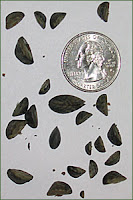
About two weeks ago, I went to my grandma and grandpa's house near Breezy Point, MN. The live on Lake Ossawinnamakee. About late October/ early November every year I help them take their docks, boats, and swimming raft out of the water for the winter. About 6 or 7 years ago we started noticing little sharp shell shaped objects attached to the docks, boats, and swimming raft. We did some research to find that these were actually an invasive specie know as zebra mussels.(The picture to the right is a cluster of zebra mussels on a native mussel)

Zebra mussels are native to Eastern Europe and Western Russia and were brought over to the Great Lakes in ballast water of freighters (used as weight to stabilize ships). Populations of zebra mussels were discovered in the Great Lakes about 1988. The spread of zebra mussels has reached the Mississippi River and are now slowly making their way into Minnesota's inland lakes. A single female Zebra Mussel can produce at a rate of 100,000-500,000 eggs per year. These eggs than develop into larvae and within two to three weeks they start attaching to docks, boats, swimming rafts, seaweed, rocks, and almost anything they can find. These Zebra Mussels also eat plankton from the lake which fish need for food to live healthy.

So to sum it up these are very troubling species that do not belong in Minnesota's inland lakes.
Each year when we take out the dock, swimming raft, and boats, the zebra mussels get thicker and thicker. The past two years I have even seen them attached in clusters to rocks in swimming areas on the lakes. With the sharpness of these species this causes the potential for them to cut swimmers. To help prevent the spread of zebra mussels, examine boat hulls, swimming platforms, docks, aquatic plants, wood and other objects along shorelines of lakes and rivers. Also do not transfer water from one lake to another by boat or any other type of container. There is a Volunteer Zebra Mussel Monitoring Program where you can report your efforts each year.

The Minnesota DNR has also been studies done on this lake and a video with more information can be found by clicking here.

Sunday, November 6, 2011

Advocacy Project: My Political Representatives


President:
Barack Obama Democrat
The White House
1600 Pennsylvania Avenue NW
Washington, DC 20500


Governor:
Mark Dayton Democrat
Office of the Governor
130 State Capitol
75 Rev. Dr. Martin Luther King Jr. Blvd.
St. Paul, MN 55155
Phone: 651-201-3400

Congresspersons:

Amy Klobuchar US Senate, Democrat
302 Hart Senate Office Building
Washington, DC 20510
Phone: 202-224-3244

Al Franken US Senate, Democrat
Duluth Office:
515 W 1st St
Suite 104
Duluth, MN 55802
Phone: (218) 722-2390

Chip Cravaak US House, Republican
Duluth Office: Gerald W. Heaney Federal Building and United States Courthouse
515 West First Street, Room 235
Duluth, MN 55802
Phone: (218) 740-7803

State Legislators:
(HOUSE)
Kelby Woodard (R)
539 State Office Building
100 Rev. Dr. Martin Luther King Jr. Blvd.
Saint Paul, Minnesota 55155
651-296-7065 or 800-920-5887

Michael Beard (R)
417 State Office Building
100 Rev. Dr. Martin Luther King Jr. Blvd.
Saint Paul, Minnesota 55155
651-296-8872

(SENATE)
Al DeKruif (R)
75 Rev. Dr. Martin Luther King Jr. Blvd.
Capitol Building, Room G-24
St. Paul, MN 55155-1606
651.296.1279

Julianne E. Ortman (R)
75 Rev. Dr. Martin Luther King Jr. Blvd.
Capitol Building, Room 120
St. Paul, MN 55155-1606
651.296.4837

Mayor of New Prague:
Chuck Nickolay

Wednesday, November 2, 2011

Reflection: Week 1-7


Reflection:

Weeks 1-2: I didn't really know what to expect coming into this class. I had little knowledge about blogging and how to create my own blog. This class makes blogging very easy and goes slow enough for me to catch on without any problems. The first two weeks were pretty laid back, we just set up our blog and watched a 60 Minutes video on Rewriting the Sciences. This video talked about the how the government has been hiding science that has information regarding global warming.

Weeks 3-4: These two weeks we learned more about blogging and different features. We also got web groups of people's blogs we had to read and comment on. I also created my eco-chic lifestyle change activity where I created a SMART goal. My goal was to use less paper products, such as paper plates, cups, napkins, and eat fast food only once a week. I really enjoyed this change and found that making one small easy change leads to making more small changes. Like I started washing my dishes by hand instead of using the dishwasher. We also did a few fun outdoor activities with a jump rope and a meditation type of activity.

Weeks 5-7: We watched "Future of Food". This was a great video that showed how genetically modified foods affect farmers and the food we eat. We also watched "Fresh". This video showed where our food was coming from and how animals were being treated. So we need to keep in mind where the food at the supermarket is coming from and how it is processed. All the videos we watched have really got me thinking about where the food and drinks I am consuming are coming from. So far I have enjoyed and learned something from every video we have watched in class.

Overall, this class has been very enjoyable between the blogging, videos, class room discussion, and now we just got introduced to junking so I am looking forward to that the next few weeks!


Monday, October 31, 2011

Eye Opener: Junk on the Brain

Part I:

Antiques/ Antiquing- An old collectable items. Desirable because of age, beauty, and rarity.
(Wikipedia)

Junk/ Junking- To discard as useless of reuse parts. (Free Dictionary)

Flea Market- market, usually held outdoors, where antiques and used household goods are sold. (Free Dictionary)

Thrift Shop- A shop that sells used articles, especially clothing, as to benefit a charitable organization. (Free Dictionary)

Up cycling- the process of converting waste materials or useless products into new materials or products of better quality or a higher environmental value. (Wikipedia)

Resale Shop- The act of selling again. (Free Dictionary)

Part II:

The terms above are all related to environmental health because they all involve re-using and recycling products. Re-using products reduces the environmental impact that comes with the creation or manufacturing of new products. All the terms above are great ways to re use old products that can still be used by people in some way.

Antiques- Father Time Antiques www.fathertimeantiques.com 395 S Lake Ave Duluth, MN 55802 (218) 625-2379
Junking- Savers www.savers.com 1740 Mall Drive Duluth, MN 55811 218-722-1894
Flea Market- Studebaker drivers club swap meet and flea market 2101 Trinity Road, Duluth MN 55811.
Thrift store- Ragstock http://www.ragstock.com/ 7 West Superior Street. 218-722-1201
Upcycling- Proctor True Value Building Supply 132 3rd AveDuluth, MN 55810 218-624-3651
Resale shop- Plato's Closet. http://www.platoscloset.com/locations/list/MN 5115 Burning Tree Road Suite 315C Duluth, MN 55811

I have minimal experience with the above terms, however it is something I would love to explore and learn more about. I have brought some of my clothes that did not fit me or have been worn quite a bit and gave them to Plato's Closet to be re sold. I have also shopped at thrift stores if I am looking for a costume or something else I could re-use. I would like to learn more about antiques, there are some interesting stories behind some items and you can learn some interesting things.

Part III:

1. This is a decorative clock that sits on an old wooden ladder in the entry way. It can be decorated for all different seasons. I just thought it was cool because many people would not consider having a ladder in their home for decoration. Plus its simple to make. (Click here)

2. This is a window box for inside the home that is made out of old scrap wood and can hold plants inside your home. I liked this because its a convenient way to have plants in your home without having them sit on the floor or table. I also liked the deer antlers that are in the display too! (Click Here)

3. This a old rusty lamp that was refinished and rewired to be re-used once again. All it takes is just cleaning it up a little and get it working again and you have a lamp that is as good as new. I liked this because my grandparents make lamps out of wood and other different re-usable materials. (Click Here)

Tuesday, October 25, 2011

Eco-Chic Lifestyle Change Week 5: Final Review and Overall Reflection


Reviewing the previous week:

1. My SMART Goal:
I will eliminate all paper products including napkins, paper towels, paper plates, and paper cups from my lifestyle. Also eating at fast food only one time per week.

2. This week I did not uses any paper products or eat fast food. I was at my grandma's and grandpa's house getting ready for deer hunting and taking out their dock for the winter. My grandma loves to cook for everyone so I ate some good meals and did not have to use paper products.

3. I felt good about achieving my SMART goal this week since I did not have success last week. I feel I have raised my awareness about using paper and the effects it has on the environment.

4. I learned that I am constantly aware of when me or someone else uses paper products. I find myself thinking about my SMART goal every time someone uses paper products.

5. I will try to continue with my SMART goal even though the assignment is over. It really wasn't that challenging to change this habit I had so I will stick with it.

Reviewing the entire process:

1. My SMART goal started out with me eliminating the use of paper plates from my lifestyle. By the end of week 5 my SMART goal was to eliminate the use all paper products including plates, napkins, and paper cups. I also added that I would like to reduce my fast food consumption to once per week to reduce my paper product use.

2. Some things that helped me be successful were my increased awareness of how the use of paper products effect the environment. Also I didn't mind washing my dishes by hand right away after I was done eating my meals. Some challenges I faced were when my roommates would go out to eat. I was tempted to go with them but did a good job of resisting the temptation.

3. I learned that changing one small thing can lead to making more smaller changes. As I added something to my SMART goal almost every week. I eliminated the use of paper plates, then I eliminated the use of all paper products, then I started to wash my dishes by hand, then I ate less fast food, and all those things resulted in less garbage.

4. The environment benefits from my behavior change by saving trees and saving the amount of chemicals used in creating paper. I also produced less garbage by my behavior change. To view the paper making process, click here.

5.I will continue with my behavior change. It wasn't very challenging and these small changes can have an impact on the environment. It is also healthier for myself if I continue with my SMART goal.

6. One small change can lead to other small changes and everything adds up. If everyone makes small changes everyone will benefit from it.

Sunday, October 23, 2011

Eye Opener: Environmental Working Group

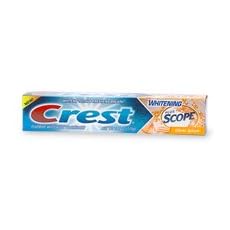
The product I chose to evaluate was Crest Whitening plus Scope Citrus Splash Toothpaste. I usually use Crest toothpaste but I switch up the flavors or try different kinds every time I buy new toothpaste. I am evaluating the toothpaste that I currently am using now. There are a few minor concerns with this toothpaste.

There are a few ingredients that are toxic to my organ system and also may cause cancer. I feel like the risk these ingredients present are not as serious as this evaluation website makes them sound. The amount of toothpaste a person uses is a very small amount and the majority of it is not swallowed. They also have directions on the bottle that suggest users of the product should be two years old or older and children should use the product under adult supervision.

They have this product listed at a low to moderate overall hazard level. However, I feel with the amount of people using toothpaste it is a lower hazard level than that. I will still continue to use Crest products, but will compare different brands to Crest to see if there are any significant differences in their hazard levels.